
Promotion
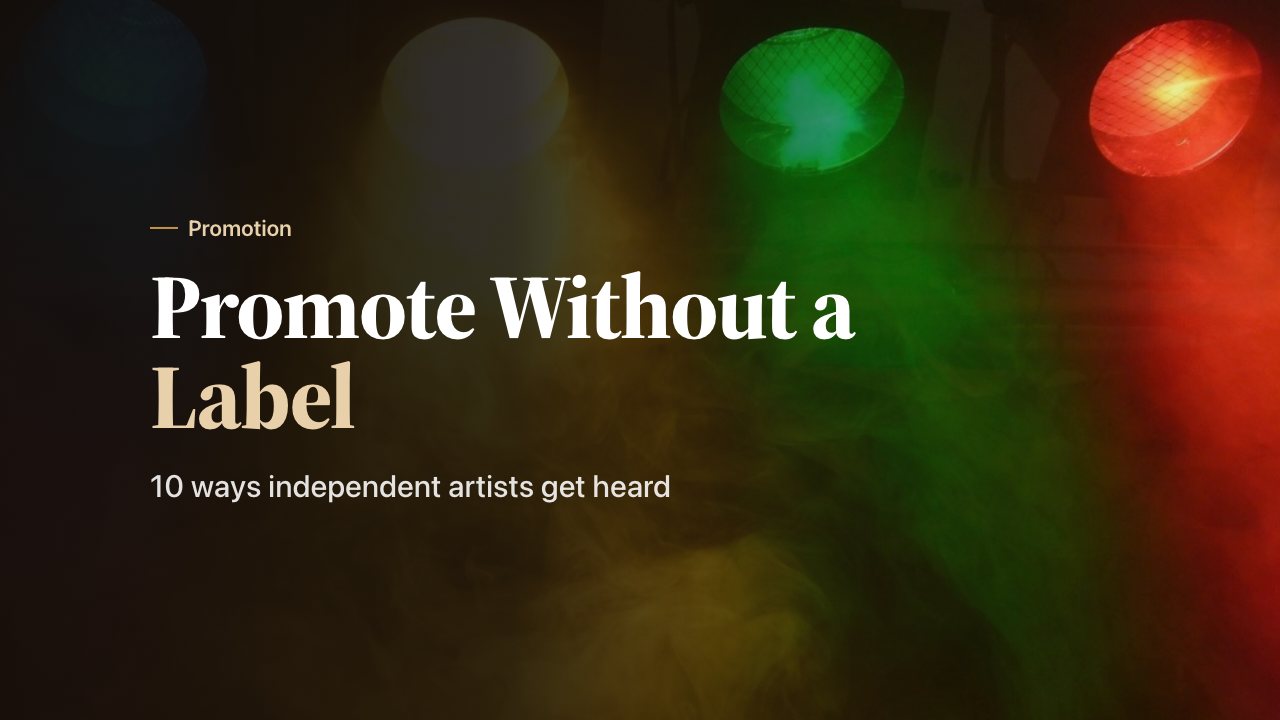
10 Ways Independent Artists Can Promote Their Music Without a Record Label
A label used to be the only way to get heard. Now most of the tools are free or cheap, and the hard part is knowing which ones are worth your time.
Nat. W.
· 4 min read
Key takeaways
- Start with the people closest to you: an email list and direct messages outperform big broadcasts.
- Short video is the best free discovery tool you have. Post consistently, not perfectly.
- Collaborations and local shows put you in front of audiences who already trust someone.
- Skip paid streams and fake playlist placements. They can get your music removed.
A record label does three big things: it pays for recording, it gets the music in front of people, and it handles the business. Today you can do a surprising amount of all three yourself, often for free.
Here are ten ways to promote your music independently, roughly from the easiest to start to the ones that take more time.
1. Build an email or text list from day one
Social apps decide who sees your posts. An email list doesn't. Even fifty people who chose to hear from you are worth more than thousands of followers who never see your updates. Put a sign-up link in your bio and mention it at every show.
2. Make short videos about the music, not just of it
Short-form video is the strongest free discovery tool most artists have. The videos that travel usually tell a tiny story: how a line was written, a voice memo turning into the final song, someone hearing it for the first time. Post often, and treat each video as an experiment.
3. Pitch your release to Spotify's editors
If you're on Spotify, use Spotify for Artists to pitch an unreleased song to the editorial team. Pitch at least seven days before release so it can also reach your followers' Release Radar. Fill in the genre, mood, and story fields with care. It's free and takes ten minutes.
4. Reach out to independent curators and blogs
Many playlist curators and music blogs accept submissions directly. Listen to the playlist or read the blog first, and only pitch where your song genuinely fits. A short, personal note with one link beats a mass email every time.
5. Collaborate with artists your size
A feature, a joint cover, or a shared show introduces you to an audience that already trusts the other artist. Look for people at about the same stage as you. They need the same thing you do, and they'll actually say yes.
6. Play live, and play local
Open mics, cafés, breweries, and house shows build fans faster than almost anything online, because people remember someone they saw in person. Bring a QR code to your link page so people can follow you before they leave.
7. Post covers to borrow attention
People search for songs they already love. A good cover lets them discover your voice through a song they know, then come back for your originals. More on that in our post on originals versus covers.
8. Be easy to find where people search
Make sure your name, photo, bio, and links match across every platform, and that you have a page that explains who you are in plain words. Search engines and AI assistants recommend artists they can clearly understand.
9. Join communities, then contribute
Local music groups, songwriting circles, Discord servers, and platforms built for musicians are full of potential fans and collaborators. The rule is simple: give before you ask. Comment, support other artists, and show up. Promotion works best when people already know you.
10. Turn one release into a month of content
Most artists post a song once and move on. Instead, plan a month: the teaser, the release, the lyric video, the acoustic take, the story behind it, a fan's cover. Each piece reminds people the song exists.
What to avoid
Some shortcuts cost more than they give:
- Buying streams or followers. Spotify prohibits artificial streaming and can remove tracks or withhold royalties when it detects it.
- Playlists that guarantee streams for a fee. If a service guarantees the numbers, the numbers are often fake.
- Dropping links in strangers' comments and DMs. It trains people to ignore you.
Where GigNBizz fits
We built GigNBizz to cover a few of these in one place: a link page for your bio, Song Covers on your profile, song charts where listeners upvote new music, and local businesses looking to book live acts. Use it alongside everything above, not instead of it.
You don't need a label to be heard. You need a plan, a few tools, and the patience to keep at it.
Questions, answered
How can I promote my music without a record label?
Start with the people closest to you: build an email or text list and message fans directly. Post short videos that tell a tiny story about the music, pitch releases to Spotify's editors, and reach out to independent curators and blogs where your song genuinely fits. Collaborating with artists your size and playing local shows put you in front of audiences who already trust someone.
How far in advance should I pitch a song to Spotify's editors?
Pitch an unreleased song through Spotify for Artists at least seven days before release. That timing also lets it reach your followers' Release Radar. Fill in the genre, mood, and story fields with care. It's free and takes about ten minutes.
Is it worth paying for streams or playlist placements?
No. Spotify prohibits artificial streaming and can remove tracks or withhold royalties when it detects it. If a playlist service guarantees streams for a fee, the numbers are often fake. These shortcuts can get your music removed, so they cost more than they give.
Keep reading
 GrowthHow to Get Your First 1,000 Monthly Spotify ListenersShane B. · 3 min read
 VocalsAre You Actually a Good Singer? How to Evaluate Your Vocal SkillsNat. W. · 3 min read
 Artist lifeThe Struggle of Being an Independent Artist: 10 Problems Nobody Talks AboutCed P. · 3 min read
Put it to work on GigNBizz
Share your songs, post Song Covers, and get booked by local businesses. Free to join.