
To get booked at a Hudson Valley brewery, winery or farm, send a short email with a link to your music, a live video, a promo photo, your sound setup and your fee, and send it months before the season you want. Bigger rooms typically book 4 to 5 months out and smaller ones 1 to 3 months out, according to CD Baby. These rooms matter. The seven Mid-Hudson counties hold 242 active licenses for breweries, wineries, cideries and farm distilleries, and many of them put music on every weekend. Here's when to pitch, what to send, what it pays, and how to get asked back.
TL;DR
- The Mid-Hudson region has 242 active craft beverage maker licenses (State Liquor Authority data, checked November 9, 2026). Ulster, Dutchess and Orange counties have the most.
- Many taprooms and tasting rooms run music on weekend afternoons, often 2 to 5 or 3 to 6, plus some Friday and Saturday evenings.
- Pitch bigger rooms 4 to 5 months before the season and smaller ones 1 to 3 months before. For spring 2027, bigger rooms are worth pitching now.
- Booking pages ask for a link to your music, a live video, a photo, a short bio, your sound gear, your fee and your dates. Have all of it ready in one email.
- Few venues publish pay. Know your number before you pitch, and get the details in writing.
- Bring your own PA, a long extension cord and a rain plan. When thunder roars, go indoors.
- Venues rebook the acts that are easy to work with. Show up early, play at the right volume, promote the date and offer more dates.
Table of contents
- Why these stages matter
- When to pitch for each season
- How these venues book
- What venues want from you
- What it pays
- A pitch email template
- Your outdoor gig one-sheet
- How to get rebooked
- FAQ
Why these stages matter
In the Hudson Valley, a lot of live music doesn't happen in clubs. It happens on brewery patios, winery porches, farm barns and orchard lawns. These places want people to stay a while, and music helps.
There are a lot of them. We counted active licenses for beer, wine, cider, mead and farm spirits makers in the State Liquor Authority's public active licenses dataset on November 9, 2026, for the seven counties of the state's Mid-Hudson region: Dutchess, Orange, Putnam, Rockland, Sullivan, Ulster and Westchester.
| License type | Active in the Mid-Hudson region |
|---|---|
| Farm winery | 55 |
| Farm brewery | 51 |
| Micro-brewery | 46 |
| Farm distillery | 34 |
| Winery | 23 |
| Farm cidery | 12 |
| Other (micro farm winery, restaurant brewer, cider producer, farm meadery, special farm winery) | 21 |
| Total | 242 |
Ulster County has the most (69), then Dutchess (56) and Orange (52). One business can hold more than one license, so the 242 licenses sit at about 190 addresses. Statewide, the same data shows 409 farm wineries and 334 farm breweries.
Why does the "farm" part matter to you? Under the State Liquor Authority's brewery rules, a farm brewery must use 60% New York hops and 60% other New York ingredients in its beer, and it may pour other New York-labeled beer, wine, cider, mead and liquor at its premises. It must make food available, and it can sell other items too. Put simply, these places are built to be local hangouts, and a hangout needs music.
The region also has a wine trail with a long music habit. The Shawangunk Wine Trail, established in 1984, lists 13 member wineries on its site. Five of them are in the table below: Angry Orchard, Applewood, Brotherhood, Clearview and Warwick Valley.
Who's hosting music now
Here's what a sample of venues say about music on their own sites. Last checked: November 9, 2026. Schedules change, so confirm on the venue's site before you go or pitch.
| Venue | Town | What their site says |
|---|---|---|
| Tin Barn Brewing | Chester | Live music Friday and Saturday 6 to 9pm, Sunday 3 to 6pm, with a lineup posted into mid-December |
| Gardiner Brewing Company | Gardiner | A farmer-owned brewery in an old dairy barn behind Wright's Farm, with "live music every weekend" |
| Lasting Joy Brewery | Tivoli | Sunday afternoon sets, mostly 3 to 5pm, from May to October 2026 |
| Warwick Valley Winery & Distillery | Warwick | "Every weekend, rain or shine," on one of its stages, 2 to 5pm, with paid admission on September and October weekends |
| Clearview Vineyard | Warwick | Weekends 2 to 5pm, on the porch or in the tasting room |
| Applewood Winery | Warwick | Saturday sets 2 to 5pm, listed through December 12 |
| Brotherhood Winery | Washingtonville | Afternoon sets, such as noon to 4pm on June 21, 2026 |
| Angry Orchard Cider House | Walden | Live music events with no tickets required, such as 5 to 8pm on August 14, 2026 |
| Barton Orchards | Poughquag | The Harvest Lounge, a bar with "the area's best local musicians" |
| Fishkill Farms | Hopewell Junction | An open mic night on Friday, November 20, 2026, 4 to 6pm |
Notice the pattern: lots of weekend afternoons. That shapes what these venues want, which we'll get to. An open mic like the one at Fishkill Farms is also a low-pressure way to get heard by a farm's staff before you pitch.
When to pitch for each season
Each venue sets its own calendar, and we couldn't find a Hudson Valley venue that publishes its booking deadlines. So use a general rule and then ask. CD Baby's DIY Musician says large, popular venues typically book 4 to 5 months out, while smaller venues may work 1 to 3 months out. It suggests at least one month of lead time.
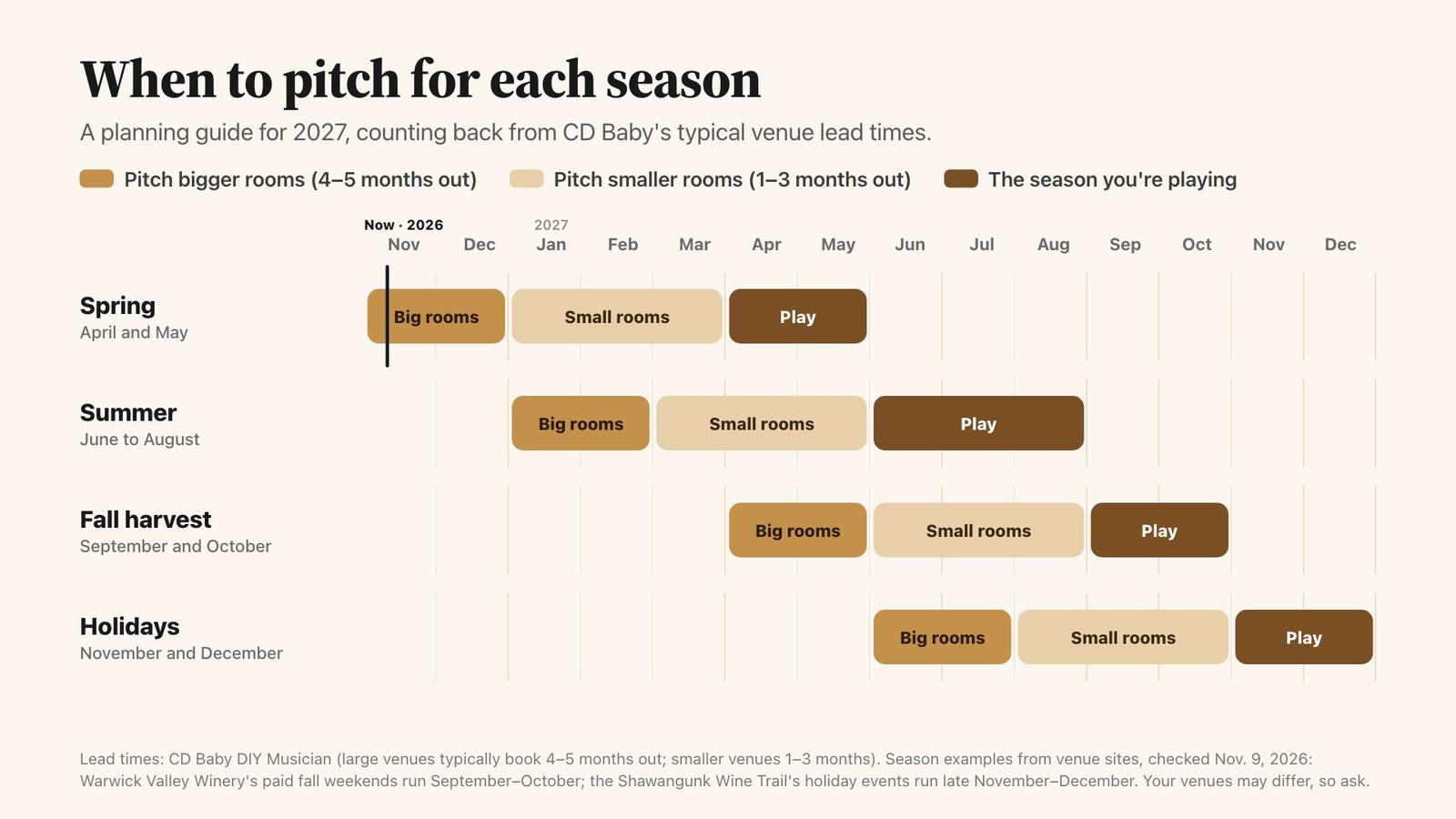
| To play in | Pitch bigger rooms | Pitch smaller rooms |
|---|---|---|
| Spring (April and May) | November and December | January to March |
| Summer (June to August) | January and February | March to May |
| Fall harvest (September and October) | April and May | June to August |
| Holidays (November and December) | June and July | August to October |
Fall is worth planning for. Warwick Valley Winery charges admission on its September and October weekends, which tells you those are big days for the venue. The holidays bring their own events too: the Shawangunk Wine Trail's ticketed holiday weekends run from late November into December.
Reading this in November? Your timing is good for spring. Send pitches for April and May dates now to the bigger venues, and save the smaller ones for January.
How these venues book
Here's what we found when we checked Hudson Valley venue sites: most don't have a musician booking page at all. Tin Barn, Barton Orchards, Applewood and Arrowood Farms, for example, list a general email or phone. A few make it easier. Lasting Joy Brewery in Tivoli has a "Perform or host a workshop" button that opens an email to the brewery. Gardiner Brewing has a contact page and an events calendar.
So most of the time, your pitch goes to a general inbox. That means it has to be short, clear and complete, because whoever reads it may forward it to the person who books music.
To see what bookers want, we compared three venues that do publish musician booking pages. None is in the Hudson Valley, but they show what a brewery booker looks for:
- Flounder Brewing in Hillsborough, NJ, asks for an intro email, an EPK, links to live performance videos, a photo, and a 2 to 3 sentence write-up for promotion. It says it gets a high volume of requests and has limited spots each year.
- Odd Man Rush Brewing in Eagle River, Alaska, asks for your contact details, whether you have your own sound person, a link to hear your music, and your band fee.
- The Patch Brewery, a farm brewery in Maple Ridge, British Columbia, asks your act type (solo to full band), your Instagram, links, marketing photos, the dates you want, and what sound gear you have or need.
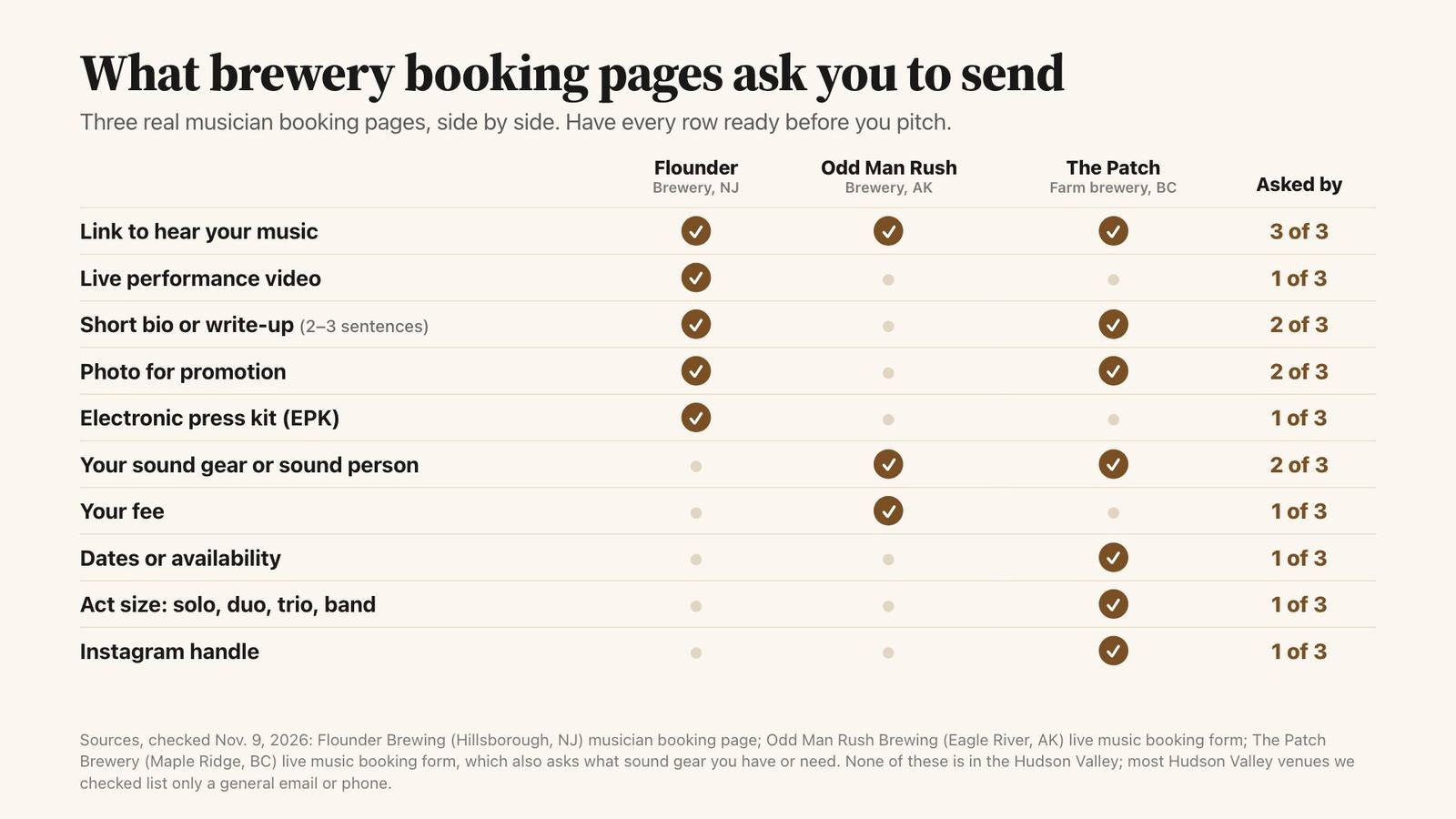
Put it together and you have the venue's checklist. If your email answers every row before they ask, you've saved the booker a reply, and that alone puts you ahead.
What venues want from you
Booking pages tell you what to send. The schedules tell you what to play.
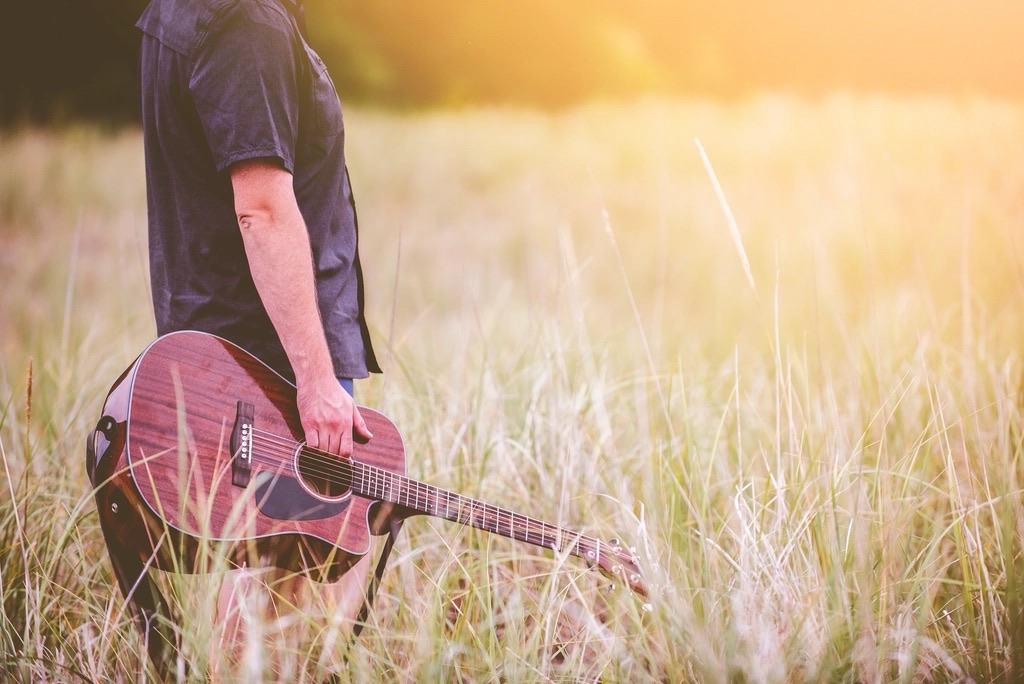
- A set that fits a daytime crowd. Many slots above are weekend afternoons. At farms, families are part of the audience. When we visited Alstede Farms in Chester, NJ, local musicians played a stage under string lights while families wandered the grounds.
- The right size act. Flounder Brewing's Saturdays feature duos, trios and quartets. Porches, tasting rooms and barns rarely have room for a big stage. Solo, duo and trio acts fit most of the spaces in the table.
- Originals and covers, done your way. Flounder says its Saturdays focus on original work and creative covers, and its Friday Songwriter's Corner series favors originals over cover-heavy sets. Bring both, and lead with whatever you do best.
- Your own sound. Two of the three booking forms ask about your sound gear or sound person. If you can run your own small PA, say so in the first email.
- A sound that fits the region. Aja Whitney, Music Director at Radio Woodstock, told Travel Hudson Valley that the region "definitely leans into the Woodstock genre": "a little Americana, a little rootsy, a little rock." That's not a rule, but it tells you what many crowds expect.
- Promotion. Flounder and The Patch both ask for photos and copy they can use if they book you. Venues want acts that help fill the patio, so share the date too.
- Reliability. No form says it, but every venue wants it: answer emails, show up on time, and end when you said you would.
What it pays
We'll be straight with you: none of the Hudson Valley venues we checked publishes what it pays musicians. Pay depends on the venue, the day, the length of the set and the size of your act, so you'll set it in conversation.
National numbers give you a starting point. Thumbtack's national average for a solo musician is $328 to $655 per event, and for a band it's $407 to $854 (both updated October 28, 2026). Those averages include weddings and private parties, which usually pay more than venue gigs. One Georgia musician quoted by Thumbtack charges $50 an hour for restaurants and $100 an hour for private parties and weddings.
| What to know | Why it matters |
|---|---|
| Have a number ready | Odd Man Rush's booking form asks for your band fee. Some venues expect you to name it. |
| Ask what's included | Set length, breaks, food or drinks, and whether tips are welcome. The duo we saw at Alstede had a tip jar out front. |
| Price your gear and travel | Thumbtack lists transporting gear and travel among the costs that raise a musician's price. |
| Offer a package | Thumbtack notes that booking several events at once can earn a discount. A run of Sundays is a good deal for both sides. |
| Get it in writing | Date, times, pay, how you're paid and the rain plan, in one email the venue replies to. |
For a deeper look at setting your rate, see our guide on how much to charge for a gig.
A pitch email template
CD Baby suggests keeping a booking email short, professional and friendly, with links to your music and socials, a range of dates, and a subject line with your name, "Booking Inquiry" and your date range. Here's a version for a brewery, winery or farm. Fill in the brackets.
Subject: [Your act name]: Booking inquiry, [May to June 2027]
Hi [name, or "there" if you don't know it],
I'm [name], a [solo / duo / trio] from [town] playing [style: acoustic folk, Americana, soul covers and originals]. I caught [a set / your open mic] on [day] and think our sound would fit your [porch / patio / barn].
Here's a 60-second live clip: [link]. More songs: [link].
I'm looking at [Saturdays or Sundays] in [May and June], 2 to 3 hours. I bring my own PA and can run sound from a single outlet. My rate is [$X] for [hours].
A photo and a short bio for your posts are attached, and I'll share the date with my followers.
Would any of those dates work? Thanks for reading,
[Name] · [phone] · [Instagram]
Then wait. CD Baby advises waiting at least a week before you follow up, and if a follow-up gets no reply after another week, moving on to the next venue. One polite follow-up is fine. Three is too many.
If your materials aren't ready yet, our guide to making an EPK walks through them.
Your outdoor gig one-sheet
Outdoor gigs go wrong in small ways: no outlet nearby, a sudden shower, a sun that blinds your tablet screen. Ask these questions when you confirm, and pack for them.
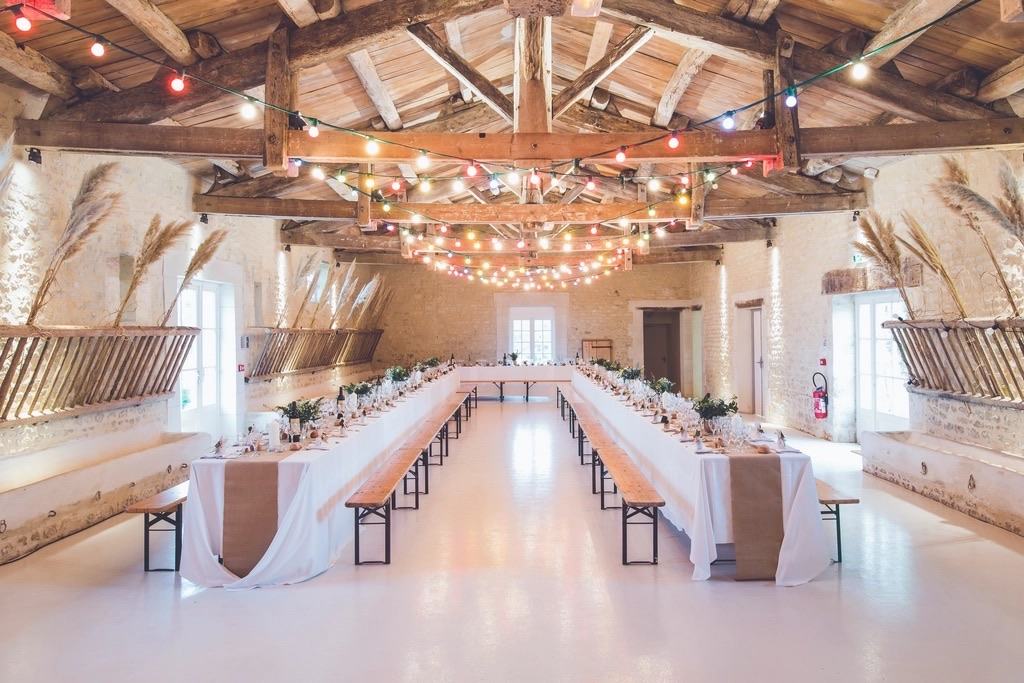
Questions to ask when you confirm
- Where exactly do I set up, and where is the nearest outlet? How far is it?
- What's the rain plan? Indoors, under cover, or canceled, and is the pay the same?
- When can I load in, and where do I park?
- Is there a volume limit, or neighbors to think about?
- Who's my contact on the day, and what's their phone number?
- Do you want a set list, or any songs left out for a family crowd?
What to pack
| Item | Why |
|---|---|
| Small PA or battery-powered speaker, plus mic and stand | Many venues expect you to bring your own sound |
| A long outdoor extension cord and a power strip | The outlet is rarely where the stage is |
| Tape for cables | So nobody trips on the patio |
| A tarp or cover for your gear | For the shower that wasn't in the forecast |
| Clip-on lights or a stand light | Afternoon sets can end at dusk, especially in fall |
| Layers, water and sunscreen | A three-hour set in the sun or the cold is long |
| Printed set list and lyrics | Screens are hard to read in bright sun |
| A sign with your name, QR code to your music and a tip jar | So the people who like you can find you again |
One rule doesn't bend. The National Weather Service's lightning safety advice is "When thunder roars, go indoors," and it says there is no safe place outside when thunderstorms are in the area. If you hear thunder, stop playing and go inside. Agree on that with the venue ahead of time, so nobody argues about it mid-song.
How to get rebooked
The first gig is the hard part. The second should be easy, and venues show it: Lasting Joy's 2026 schedule has the same two performers back several times each over the season.
- Show up early and set up quietly. Be ready before the start time, not starting your sound check at it.
- Play to the room. Keep the volume where people can still talk. Read the crowd, and save the loud closer for when it fits.
- Promote the date. Post before and during the gig, and tag the venue. Venues remember who brought friends.
- Thank the staff. The bartender and the person at the register talk to the owner.
- Ask before you leave. "I had a great time. Can we look at dates for next season?" Most rebookings happen right there.
- Offer a run of dates. Monthly Sundays, or every other Saturday through fall. It makes planning easy for the venue.
- Follow up in writing. Send a thank-you email the next day with a photo from the set and your open dates.
Our perspective
Brewery and winery gigs sometimes get treated as background work. We don't see it that way. A Sunday afternoon on a porch in Warwick or a barn in Gardiner is where a lot of people hear live original music for the first time, and where many local musicians learn to hold a crowd.
The venues need you, too. A taproom with a good act on the patio is a place people stay. The best version of this is simple: a local business and a local musician who trust each other, a fair price, and a date on the calendar every month.
Find venue gigs with GigNBizz
GigNBizz is a free community where independent musicians find local gigs and local businesses book them. It started around the Hudson Valley, NYC and Jersey City. If you play, you can:
- Make a free artist page with your songs, so a venue can hear you before it replies.
- Answer open dates that businesses post, and requests from the Booking Agent on Discover, where a business asks for an act and nearby verified musicians answer.
- Swipe local businesses on Discover, connect and message them. You settle the date, set and pay directly with each other. GigNBizz never handles gig pay.
- List your shows under Shows on Home, so people nearby can find them.
See how it works for musicians, browse the Hudson Valley page, or read the FAQ.
FAQ
How do I get booked at a Hudson Valley brewery or winery?
Go to a music day first, then email the venue a short pitch with a link to your music, a live video, a promo photo, two or three sentences about you, what sound gear you bring, your fee and the dates you want. Most Hudson Valley venues we checked list only a general email or phone, so use that and keep it short.
When do breweries and wineries book their summer music?
It varies by venue, so ask. CD Baby says large, popular venues typically book 4 to 5 months out and smaller ones 1 to 3 months out. For June to August, that means pitching bigger rooms in January and February and smaller ones from March to May.
How much do breweries and wineries pay musicians?
None of the Hudson Valley venues we checked publishes its pay. Thumbtack's national averages are about $328 to $655 for a solo musician and $407 to $854 for a band, per event, but venue gigs can pay less than private events. Come with your own fee: some booking forms ask for it.
Do I need my own PA to play a brewery or winery?
Plan on it unless the venue tells you otherwise. Two of the three booking forms we compared ask about your sound gear or sound person. Ask where the outlet is, how far it is from where you'll play, and what happens if it rains.
What should I send in a booking email to a venue?
A short, friendly note with your name and act size, a link to hear your music, a live performance video, a photo and short bio they can use for promotion, your sound setup, your fee and a range of dates. CD Baby suggests waiting at least a week before following up.
Sources
- New York State Liquor Authority: Current Liquor Authority Active Licenses (data.ny.gov, queried Nov. 9, 2026)
- New York State Regional Economic Development Councils: Mid-Hudson
- New York State Liquor Authority: Brewery Quick Reference (Feb. 27, 2025)
- Shawangunk Wine Trail and its member list
- CD Baby DIY Musician: Top tips for booking gigs as an indie artist (July 22, 2025)
- Tin Barn Brewing: Hudson Valley lineup
- Gardiner Brewing Company
- Lasting Joy Brewery: Taproom events
- Warwick Valley Winery & Distillery: Live music & festivals
- Clearview Vineyard: Music
- Applewood Winery: 2026 live music schedule
- Brotherhood Winery: Live Music, June 21, 2026
- Angry Orchard Cider House: Live Music, August 14, 2026
- Barton Orchards: The Harvest Lounge
- Fishkill Farms: Events
- Flounder Brewing: Musician booking information
- Odd Man Rush Brewing: Live music booking form
- The Patch Brewery: Live music bookings form
- Travel Hudson Valley: These Hudson Valley breweries host live music (June 1, 2023)
- Thumbtack: How much does it cost to hire a solo musician? (updated Oct. 28, 2026)
- Thumbtack: How much does hiring a band cost? (updated Oct. 28, 2026)
- National Weather Service: Lightning safety
- GigNBizz News: Golden hour at Alstede Farms
Photos: rawpixel (CC0). Charts: GigNBizz.